Case Report | | Peer-Reviewed

Trigeminal Neuralgia in MPZ Gene-related Families: A Family Report and Literature Review

Received: 2 November 2025     Accepted: 19 November 2025     Published: 20 December 2025
Views:       Downloads:
Abstract

Background: Trigeminal neuralgia (TN) is one of the most common clinical cranial nerve disorders. Typical TN is characterized by paroxysmal severe pain, which can be described as electric shock-like, needle-prick-like, or tearing-like. Each episode lasts from several seconds to several minutes, seriously impairing patients' quality of life, work ability, and social interaction skills. A family with 2 or more patients suffering from trigeminal neuralgia is defined as a familial trigeminal neuralgia (FTN,Familial trigeminal neuralgia) family. Currently, research on FTN remains relatively scarce. Objective: To enhance clinicians' understanding of the relationship between trigeminal neuralgia and genetics, facilitate early screening and identification of suspected FTN patients, provide insights into the pathogenesis of FTN, and offer references for the treatment and prognosis of affected patients. Methods: Whole-genome sequencing and Sanger sequencing of the single locus in the myelin protein zero (MPZ) gene were performed on 5 members of a TN family (including 3 TN patients and 4 individuals with scoliosis and pes cavus). Results: All 4 tested family members carried a heterozygous mutation at the c.308G>A (p.Gly103Glu) locus, which was inherited from the proband's mother. Sanger sequencing of the single MPZ locus in the proband's father showed no variation. The 3 TN patients underwent treatments such as microvascular decompression of the trigeminal nerve or percutaneous balloon compression of the trigeminal ganglion, with favorable postoperative outcomes and no pain recurrence. Conclusion: Through whole-genome sequencing and literature review, our team identified a novel variant-MPZ c.308G>A (p.Gly103Glu)-that is associated with FTN, a rarely reported phenotype. Additionally, members of this family exhibited clinical manifestations of Charcot-Marie-Tooth disease (CMT), such as scoliosis and pes cavus.

Published in International Journal of Pain Research (Volume 1, Issue 4)
DOI 10.11648/j.ijpr.20250104.19
Page(s) 188-194
Creative Commons

This is an Open Access article, distributed under the terms of the Creative Commons Attribution 4.0 International License (http://creativecommons.org/licenses/by/4.0/), which permits unrestricted use, distribution and reproduction in any medium or format, provided the original work is properly cited.

Copyright

Copyright © The Author(s), 2025. Published by Science Publishing Group

Keywords

Trigeminal Neuralgia, Familial, Myelin Protein Zero, Charcot-Marie-Tooth Disease

1. Introduction
Trigeminal neuralgia (TN) is one of the most common clinical cranial nerve disorders. Typical TN presents with paroxysmal severe pain, described as electric shock-like, needle-prick-like, or tearing-like, with each episode lasting from several seconds to several minutes. It severely affects patients' quality of life, work, and social interaction. A family with ≥2 TN patients is termed familial trigeminal neuralgia (FTN), accounting for 1%–2% of TN cases . Currently, the most common cause of TN is vascular compression. The potential pathogenesis involves focal demyelination of the trigeminal nerve at the root entry zone near the pons, which renders primary afferent neurons hyperresponsive to mechanical compression . However, genetic research on TN is limited, and Eide suggested that genetic factors may play a crucial role in TN.
From 2020 to 2024, among patients with primary TN admitted to the Department of Neurosurgery, Affiliated Hospital of Inner Mongolia Medical University, 3 individuals were identified as members of the same family during the proband's medical history collection. Genetic testing revealed a heterozygous mutation at the MPZ c.308G>A (p.Gly103Glu) locus. MPZ is the main structural protein of peripheral nerve myelin, and its mutations primarily cause Charcot-Marie-Tooth disease (CMT). There are no domestic reports of MPZ mutations associated with TN to date. This article summarizes the clinical data of this FTN family, aiming to raise awareness of FTN, promote early screening and detection of suspected FTN patients, prepare for further optimization of treatment strategies, and enable etiological treatment to play a greater role in the management of TN.
2. Case Data
2.1. Proband
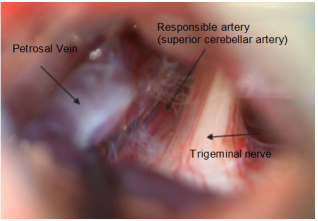
Figure 1. Microvascular Decompression Performed on the Proband with MPZ Gene-Related Trigeminal Neuralgia.
A 36-year-old male was admitted to the Department of Neurosurgery, Affiliated Hospital of Inner Mongolia Medical University, on November 8, 2023, due to "intermittent electric shock-like pain on the right side of the face for 6 months". The pain mainly affected the periorbital area, cheek, and mandible on the right side. Previous treatments included intermittent acupuncture, oral Chinese medicine, and carbamazepine, but the therapeutic effect was poor. He had a history of scoliosis and claudication for more than 30 years, which had not been addressed. Physical examination revealed paroxysmal pain on the right side of the face, abnormal gait, pes cavus, and mild atrophy of the distal leg muscles; no other obvious abnormalities were found in the head and facial examination. Auxiliary examination: Brain MRI + diffusion-weighted imaging (DWI) showed no obvious abnormalities. The patient underwent microvascular decompression of the trigeminal nerve (Figure 1). At the 16-month postoperative follow-up, his condition was favorable with no pain recurrence.
2.2. Proband's Mother
A 64-year-old female was admitted to our department on October 10, 2020, due to "paroxysmal pain on the left side of the face for more than 10 years". The pain was mainly concentrated in the left cheek and nasal root, and could be triggered by speaking, opening the mouth, or touching the left facial area. She had a 4-year history of hypertension, which was well-controlled with oral extended-release nifedipine tablets. Four years prior, she had undergone reduction surgery for a left lower limb fracture. She also had a history of scoliosis for more than 60 years. Physical examination showed paroxysmal pain on the left face; no other abnormalities were noted. Auxiliary examination: Brain MRI (trigeminal nerve) + magnetic resonance angiography (MRA) + fast imaging employing steady-state acquisition (FIESTA) revealed thin bilateral trigeminal nerves, with no obvious abnormal vascular loops in the nerve course. Previous treatments, including oral carbamazepine and gamma knife therapy, were ineffective. Therefore, she underwent percutaneous balloon compression of the trigeminal ganglion in our department, with favorable outcomes during follow-up.
2.3. Proband's Elder Brother
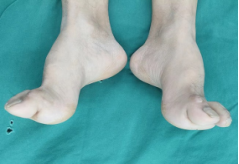
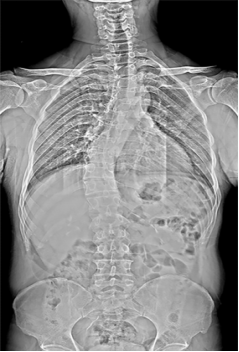
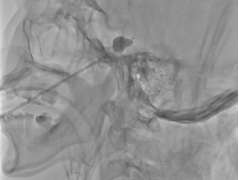
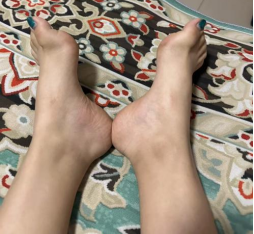
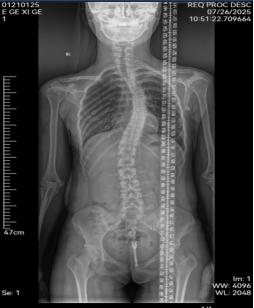
A 43-year-old male was admitted to our department on February 28, 2024, due to "intermittent pain on the right side of the face for 4 years". He had a history of scoliosis and claudication for more than 40 years. Physical examination showed pain on the right side of the face, abnormal gait, pes cavus (Figure 2), weakness in dorsiflexion of the feet, and mild atrophy of the distal leg muscles. Auxiliary examination: Brain MRI (trigeminal nerve) + MRA + FIESTA showed a vascular loop above the right trigeminal nerve; full-spine X-ray indicated scoliosis (Figure 3). The patient underwent percutaneous balloon compression of the trigeminal ganglion (Figure 4), with favorable conditions during follow-up. His daughter had a history of bilateral foot deformities (Figure 5) and scoliosis; full-spine X-ray showed moderate scoliosis (Figure 6). Currently, she has no TN symptoms and is under continuous follow-up.
Figure 2. Obvious Pes Cavus in the Proband's Elder Brother with MPZ Gene-Related Trigeminal Neuralgia.
Figure 3. Full-Spine X-Ray of the Proband's Elder Brother with MPZ Gene-Related Trigeminal Neuralgia.
Figure 4. Balloon Compression Performed on the Proband's Elder Brother with MPZ Gene-Related Trigeminal Neuralgia.
Figure 5. Pes Cavus of the Proband's Niece.
Figure 6. Full-Spine X-Ray of the Proband's Niece.
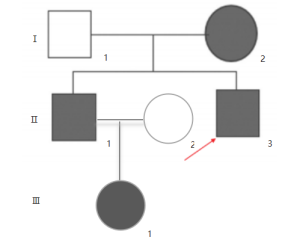
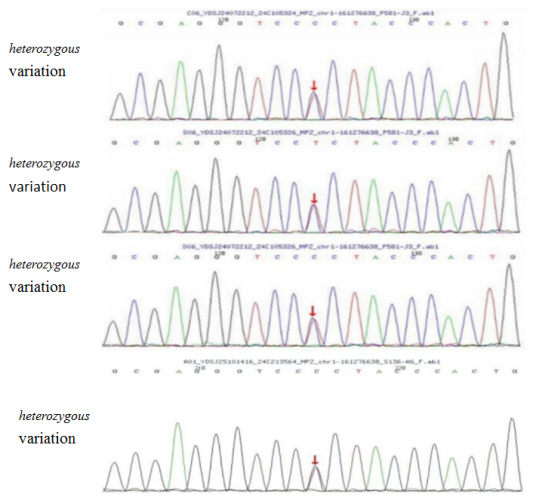
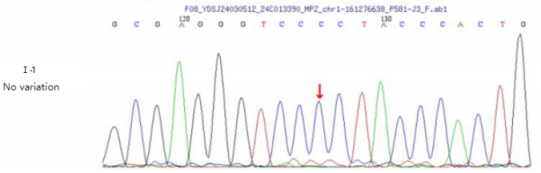
After a detailed investigation of the family history, a pedigree chart was constructed (Figure 7). Whole-genome sequencing was performed on 4 family members. The results showed that the proband carried a heterozygous mutation in the MPZ gene at the c.308G>A (p.Gly103Glu) locus: a guanine (G)-to-adenine (A) substitution at nucleotide 308 (c.308G>A), leading to a glycine-to-glutamic acid substitution at amino acid 103 (p.Gly103Glu). According to the standards and guidelines of the American College of Medical Genetics and Genomics (ACMG), this variant was classified as a variant of uncertain significance with suspected pathogenicity (PS3+PS4+PM2). The proband's mother, elder brother, and niece also carried this heterozygous variant (Figure 8). Subsequent Sanger sequencing of the single MPZ locus in the proband's father showed no variation (Figure 9).
Note: The arrow indicates the proband.

Download: Download full-size image

Figure 7. Pedigree Chart of the Family with MPZ Gene-Related Trigeminal Neuralgia.
Figure 8. Gene Sequencing Results of the Proband, his Mother, Elder Brother, and Niece.
Note: The proband (Ⅱ-3) was detected with a heterozygous mutation in MPZ at chr1: 161276638 (NM_000530.8; exon3 c.308G>A (p.Gly103Glu)). The proband's mother (I-2) was detected with a heterozygous mutation in MPZ at chr1: 161276638 (NM_000530.8; exon3 c.308G>A (p.Gly103Glu)). The proband's elder brother (Ⅱ-1) and niece (Ⅲ-1) are detected with a heterozygous mutation in MPZ at chr1: 161276638 (NM_000530.8; exon3 c.308G>A (p.Gly103Glu)).
Note: No mutation in MPZ at chr1: 161276638 (NM_000530.8; exon3 c.308G>A (p.Gly103Glu)) was detected in the proband's father (I-1).

Download: Download full-size image

Figure 9. Sanger Sequencing Results of the Proband's Father (with no MPZ Gene Variation Related to Trigeminal Neuralgia).
3. Discussion
Trigeminal neuralgia (TN) is a facial pain disorder that severely impairs patients' quality of life. Epidemiological studies have shown that the incidence of TN differs between men and women, and it increases with age. Cases of familial trigeminal neuralgia (FTN) suggest the involvement of genetic factors . Familial forms of TN are rare, and large-scale epidemiological surveys on this condition are currently lacking. However, one study found that FTN occurs in 15.3% (41/268) of TN patients, including 15.2% (37/244) of patients with classic TN and 16.7% (4/24) of patients with idiopathic TN. This proportion is higher than that reported in previous literature . Foreign literature reviews have identified genes such as CACNA1A, KCNK1, TRAK1, SCN9A, SCN10A, SCN5A, NTRK1, GABRG1, and MPZ as being associated with TN Nevertheless, there are very few reports on families with MPZ gene mutations and concurrent Charcot-Marie-Tooth disease (CMT) symptoms (Table 1). In the first two reported families, all patients were female, whereas the male-to-female ratio in the family reported in this study is 2:1. To date, there have been no similar reports in China.
Table 1. Literature Summary of MPZ Gene Mutations with CMT Symptoms in FTN.

Author

Year of Publication

Minimum Age (Years)

Gender (Cases, Male/Female)

Total Number of TN Cases in the Family

Mutant Gene Locus & Amino Acid Change

Associated Symptoms

Treatment Method

Prognosis

Méreaux et al.

2019

30

0/4

4

MPZ, c.188_190del

CMT

Trigeminal ganglion thermocoagulation therapy

Pain-free

Caress et al.

2020

41

0/5

5

MPZ (G163R), non-synonymous mutation between glycine and arginine

CMT

-

-

This Report

2025

16

2/2

3

MPZ, c.308G>A (p.Gly103Glu)

CMT

Trigeminal nerve microvascular decompression or trigeminal ganglion balloon compression

Pain-free

Note: FTN = Familial Trigeminal Neuralgia; MPZ = Myelin Protein Zero; CMT = Charcot-Marie-Tooth Disease; TN = Trigeminal Neuralgia; "-" indicates no available data.
The MPZ gene is located on chromosome 1q23.3 and consists of 6 exons. It encodes the most abundant structural protein in peripheral nervous system myelin, which is almost absent in the central nervous system and exclusively expressed by Schwann cells. The MPZ protein is a double-adhesion molecule that interacts with other proteins in the extracellular and cytoplasmic compartments of myelin to jointly maintain myelin structure and function . Research on MPZ gene mutations and their phenotypic characteristics is crucial for understanding the pathogenesis of related diseases. Therefore, MPZ mutations can induce demyelinating neuropathies, but the mechanism underlying axonal neuropathies remains incompletely understood. Shy et al. proposed that MPZ-related axonal neuropathies may result from impaired myelin-axon interactions. MPZ mutations primarily cause Charcot-Marie-Tooth disease (CMT). CMT, or hereditary motor and sensory neuropathy, is a common hereditary neuromuscular disorder, typically characterized by distal weakness, sensory loss, and acral skeletal deformities that manifest before adulthood. The pathological core of CMT includes demyelination (CMT type 1) and axonal degeneration (CMT type 2). The former has an earlier onset, causes severe neuropathy, and is associated with a significant decrease in nerve conduction velocity; the latter has a later onset (around 40 years of age), presents with milder clinical symptoms, and shows roughly normal nerve conduction velocity. Cases with special clinical phenotypes such as sensorineural hearing loss, vestibular dysfunction, or other cranial nerve impairments are classified as CMT type 2J . Since the patients in this study were admitted mainly for TN, electrophysiological examinations such as motor nerve conduction velocity were not performed. These tests can be supplemented during future hospital follow-up visits to complete the clinical data.
Currently, there are few reports on the association between MPZ and FTN. Wang et al. reviewed the literature and found a potential link between TN and CMT: 5 CMT families had concurrent TN, but the mutated gene was MARS1. This report confirms the association between FTN and CMT and identifies a novel heterozygous MPZ mutation (c.308G>A, p.Gly103Glu) associated with FTN. When the initial whole-genome sequencing results were obtained, the genetic and biological characteristics of the variant were consistent with inheritance patterns, but its correlation with clinical symptoms was unclear. After a detailed investigation of the family history and literature review, this variant was considered to be associated with a rarely reported new phenotype, which may be a common pathogenic gene for CMT. Some scholars argue that MPZ mutations are associated with CMT but may not be directly related to the development of TN; instead, the association may be indirect-patients with hereditary neuropathies are prone to developing TN decades after the onset of their neuropathic symptoms . However, there are few reports of MPZ gene mutations coexisting with both FTN and CMT, and the nature of their relationship (direct or indirect) remains uncertain. Further research involving more families is needed.
Currently, there is no consensus on the pathogenesis of FTN. To develop optimal treatment strategies for patients, it is essential to clarify the pathogenesis of FTN and formulate targeted treatment plans based on different etiologies and mechanisms. Some scholars believe that vascular compression may be involved, but other studies have reported FTN patients without CMT who also had idiopathic supraventricular tachycardia (a condition associated with CMT). No vascular compression was detected during surgical exploration in these cases, leading to the hypothesis that FTN may be related to myelin abnormalities . Initially, FTN was not considered to be influenced by genetic factors; however, with the passage of time and the accumulation of clinical research, the genetic basis of FTN has gradually attracted attention. Mannerak et al. summarized that FTN is associated with factors such as MPZ mutations, calcium channel-encoding gene mutations, hereditary anatomical abnormalities, arachnoid adhesions, central neuron hyperexcitability, and familial hereditary neurological diseases. In the family reported here, FTN was found to be associated with the MPZ c.308G>A (p.Gly103Glu) mutation-a novel variant identified by our team. This missense mutation disrupts the structure and function of MPZ, causing intracellular misfolding of the protein. When the mutant protein is retained in the endoplasmic reticulum, the unfolded protein response (UPR) is activated. The UPR is an adaptive and protective process that alleviates the stress caused by misfolded proteins. However, under chronic cellular stress, the UPR becomes insufficient and triggers apoptotic pathways, leading to cell death or altered signaling of normal phenotypes. A large number of MPZ mutations can activate the UPR and induce neuropathy . One study showed that selective inhibition of phosphatase regulatory subunits prolonged the UPR and prevented molecular, morphological, and motor deficits in MPZ-mutant mice . With the advancement of whole-exome and whole-genome studies, the genetic background of FTN appears to be complex. Further research on the genes involved in the pathogenesis of FTN is essential. Identifying the pathogenic gene (s) will provide important guidance for the development of gene therapy in the future. One of the reasons for the small number of reported FTN cases may be insufficient clinical attention to the genetic factors of TN, leading to underreporting of some cases.
4. Conclusion
In conclusion, through whole-genome sequencing and literature review, our team identified a novel variant-MPZ c.308G>A (p.Gly103Glu)-that is associated with FTN, a rarely reported phenotype. Additionally, members of this family exhibited CMT-related clinical manifestations, such as scoliosis and pes cavus. This study aims to enhance clinicians' understanding of this rare phenotype and its genetic basis, promote early screening and detection of suspected FTN patients, provide insights into the pathogenesis of FTN, and offer references for the treatment and prognosis of affected patients.
Abbreviations

TN

Trigeminal Neuralgia

FTN

Familial Trigeminal Neuralgia

CMT

Charcot-Marie-Tooth

MPZ

Myelin Protein Zero

DWI

Diffusion-Weighted Imaging

MRA

Magnetic Resonance Angiography

FIESTA

fast Imaging Employing Steady-State Acquisition

ACMG

American College of Medical Genetics and Genomics

UPR

Unfolded Protein Response

Conflicts of Interest
The authors declare no conflicts of interest.
References
[1] Pollack IF, Jannetta PJ, Bissonette DJ. Bilateral trigeminal neuralgia: a 14-year experience with microvascular decompression [J]. J Neurosurg, 1988, 68(4): 559-565.
[2] Fleetwood IG, Innes AM, Hansen SR, et al. Familial trigeminal neuralgia. Case report and review of the literature [J]. J Neurosurg, 2001, 95(3): 513-517.
[3] Love S, Coakham HB. Trigeminal neuralgia: pathology and pathogenesis [J]. Brain, 2001, 124: 2347-2360.
[4] Eide PK. Familial occurrence of classical and idiopathic trigeminal neuralgia [J]. J Neurol Sci, 2022, 434: 120101.
[5] Ashina S, Robertson CE, Srikiatkhachorn A, et al. Trigeminal neuralgia [J]. Nat Rev Dis Primers, 2024, 10(1): 39.
[6] Mannerak MA, Lashkarivand A, Eide PK. Trigeminal neuralgia and genetics: a systematic review [J]. Mol Pain, 2021, 17: 17448069211016139.
[7] Méreaux JL, Lefaucheur R, Hebant B, et al. Trigeminal neuralgia and Charcot-Marie-Tooth disease: an intriguing association. Lessons from a large family case report and review of literature [J]. Headache, 2019, 59(7): 1074-1079.
[8] Caress JB, Lewis JA, Pinyan CW, et al. A Charcot-Marie-Tooth type 1B kindred associated with hemifacial spasm and trigeminal neuralgia [J]. Muscle Nerve, 2019, 60(1): 62-66.
[9] Chen B, Zhang Z, Chen N, et al. Two novel myelin protein zero mutations in a group of Chinese patients [J]. Front Neurol, 2021, 12: 734515.
[10] Raasakka A, Kursula P. How does protein zero assemble compact myelin? [J]. Cells, 2020, 9(8): 1832.
[11] Shy ME, Jáni A, Krajewski K, et al. Phenotypic clustering in MPZmutations [J]. Brain, 2004, 127(Pt 2): 371-384.
[12] Fabrizi GM, Tamburin S, Cavallaro T, et al. The spectrum of Charcot-Marie-Tooth disease due to myelin protein zero: an electrodiagnostic, nerve ultrasound and histological study [J]. Clin Neurophysiol, 2018, 129(1): 21-32.
[13] Wang A, Song Z, Zhang X, et al. MARS1 mutations linked to familial trigeminal neuralgia via the integrated stress response [J]. J Headache Pain, 2023, 24(1): 4.
[14] Bai Y, Wu X, Brennan KM, et al. Myelin protein zero mutations and the unfolded protein response in Charcot Marie Tooth disease type 1B [J]. Ann Clin Transl Neurol, 2018, 5(4): 445-455.
[15] Das I, Krzyzosiak A, Schneider K, et al. Preventing proteostasis diseases by selective inhibition of a phosphatase regulatory subunit [J]. Science, 2015, 348(6231): 239-242.
Cite This Article
  • APA Style

    Diyuan, W., Chengwei, X., Naikang, G., Xuhua, Y., Baoyan, H., et al. (2025). Trigeminal Neuralgia in MPZ Gene-related Families: A Family Report and Literature Review. International Journal of Pain Research, 1(4), 188-194. https://doi.org/10.11648/j.ijpr.20250104.19

    Copy | Download

    ACS Style

    Diyuan, W.; Chengwei, X.; Naikang, G.; Xuhua, Y.; Baoyan, H., et al. Trigeminal Neuralgia in MPZ Gene-related Families: A Family Report and Literature Review. . 2025, 1(4), 188-194. doi: 10.11648/j.ijpr.20250104.19

    Copy | Download

    AMA Style

    Diyuan W, Chengwei X, Naikang G, Xuhua Y, Baoyan H, et al. Trigeminal Neuralgia in MPZ Gene-related Families: A Family Report and Literature Review. . 2025;1(4):188-194. doi: 10.11648/j.ijpr.20250104.19

    Copy | Download

  • @article{10.11648/j.ijpr.20250104.19,
      author = {Wang Diyuan and Xu Chengwei and Gao Naikang and Yin Xuhua and He Baoyan and Ren Junhao},
      title = {Trigeminal Neuralgia in MPZ Gene-related Families: 
    A Family Report and Literature Review},
      journal = {International Journal of Pain Research},
      volume = {1},
      number = {4},
      pages = {188-194},
      doi = {10.11648/j.ijpr.20250104.19},
      url = {https://doi.org/10.11648/j.ijpr.20250104.19},
      eprint = {https://article.sciencepublishinggroup.com/pdf/10.11648.j.ijpr.20250104.19},
      abstract = {Background: Trigeminal neuralgia (TN) is one of the most common clinical cranial nerve disorders. Typical TN is characterized by paroxysmal severe pain, which can be described as electric shock-like, needle-prick-like, or tearing-like. Each episode lasts from several seconds to several minutes, seriously impairing patients' quality of life, work ability, and social interaction skills. A family with 2 or more patients suffering from trigeminal neuralgia is defined as a familial trigeminal neuralgia (FTN,Familial trigeminal neuralgia) family. Currently, research on FTN remains relatively scarce. Objective: To enhance clinicians' understanding of the relationship between trigeminal neuralgia and genetics, facilitate early screening and identification of suspected FTN patients, provide insights into the pathogenesis of FTN, and offer references for the treatment and prognosis of affected patients. Methods: Whole-genome sequencing and Sanger sequencing of the single locus in the myelin protein zero (MPZ) gene were performed on 5 members of a TN family (including 3 TN patients and 4 individuals with scoliosis and pes cavus). Results: All 4 tested family members carried a heterozygous mutation at the c.308G>A (p.Gly103Glu) locus, which was inherited from the proband's mother. Sanger sequencing of the single MPZ locus in the proband's father showed no variation. The 3 TN patients underwent treatments such as microvascular decompression of the trigeminal nerve or percutaneous balloon compression of the trigeminal ganglion, with favorable postoperative outcomes and no pain recurrence. Conclusion: Through whole-genome sequencing and literature review, our team identified a novel variant-MPZ c.308G>A (p.Gly103Glu)-that is associated with FTN, a rarely reported phenotype. Additionally, members of this family exhibited clinical manifestations of Charcot-Marie-Tooth disease (CMT), such as scoliosis and pes cavus.},
     year = {2025}
    }
    

    Copy | Download

  • TY  - JOUR
    T1  - Trigeminal Neuralgia in MPZ Gene-related Families: 
    A Family Report and Literature Review
    AU  - Wang Diyuan
    AU  - Xu Chengwei
    AU  - Gao Naikang
    AU  - Yin Xuhua
    AU  - He Baoyan
    AU  - Ren Junhao
    Y1  - 2025/12/20
    PY  - 2025
    N1  - https://doi.org/10.11648/j.ijpr.20250104.19
    DO  - 10.11648/j.ijpr.20250104.19
    T2  - International Journal of Pain Research
    JF  - International Journal of Pain Research
    JO  - International Journal of Pain Research
    SP  - 188
    EP  - 194
    PB  - Science Publishing Group
    SN  - 3070-1562
    UR  - https://doi.org/10.11648/j.ijpr.20250104.19
    AB  - Background: Trigeminal neuralgia (TN) is one of the most common clinical cranial nerve disorders. Typical TN is characterized by paroxysmal severe pain, which can be described as electric shock-like, needle-prick-like, or tearing-like. Each episode lasts from several seconds to several minutes, seriously impairing patients' quality of life, work ability, and social interaction skills. A family with 2 or more patients suffering from trigeminal neuralgia is defined as a familial trigeminal neuralgia (FTN,Familial trigeminal neuralgia) family. Currently, research on FTN remains relatively scarce. Objective: To enhance clinicians' understanding of the relationship between trigeminal neuralgia and genetics, facilitate early screening and identification of suspected FTN patients, provide insights into the pathogenesis of FTN, and offer references for the treatment and prognosis of affected patients. Methods: Whole-genome sequencing and Sanger sequencing of the single locus in the myelin protein zero (MPZ) gene were performed on 5 members of a TN family (including 3 TN patients and 4 individuals with scoliosis and pes cavus). Results: All 4 tested family members carried a heterozygous mutation at the c.308G>A (p.Gly103Glu) locus, which was inherited from the proband's mother. Sanger sequencing of the single MPZ locus in the proband's father showed no variation. The 3 TN patients underwent treatments such as microvascular decompression of the trigeminal nerve or percutaneous balloon compression of the trigeminal ganglion, with favorable postoperative outcomes and no pain recurrence. Conclusion: Through whole-genome sequencing and literature review, our team identified a novel variant-MPZ c.308G>A (p.Gly103Glu)-that is associated with FTN, a rarely reported phenotype. Additionally, members of this family exhibited clinical manifestations of Charcot-Marie-Tooth disease (CMT), such as scoliosis and pes cavus.
    VL  - 1
    IS  - 4
    ER  - 

    Copy | Download

Author Information
  • Department of Neurology, Affiliated Hospital of Inner Mongolia Medical University, Hohhot, China

  • Department of Neurosurgery, Affiliated Hospital of Inner Mongolia Medical University, Hohhot, China
  • Department of Neurosurgery, Affiliated Hospital of Inner Mongolia Medical University, Hohhot, China

  • Department of Neurology, Affiliated Hospital of Inner Mongolia Medical University, Hohhot, China

  • Department of Neurosurgery, Affiliated Hospital of Inner Mongolia Medical University, Hohhot, China

  • Department of Neurosurgery, Affiliated Hospital of Inner Mongolia Medical University, Hohhot, China